Saturday, September 17, 2011
Good Things I've Eaten: Bruschetta al Tartufo
Wednesday, September 14, 2011
Great Italian Words: Mangiare

Mangiare translates “to eat”, but used on its own, mangiare is a much more serious verb. In Campania, mangiare means to really eat: multiple courses, pasta, meat, fruit, wine, coffee, and a nap. If you haven't done that, you haven't really eaten.
Some of the kids in the pizzeria would arrive around six-thirty for the evening shift and start snacking on pieces of ham, walnuts, whole roasted sausages, french fries, anything they could get their hands on.
“Bernado, are you hungry?” I would ask.
“Yes, I didn't eat today.”
At first I took Bernardo to be lying: he is always putting things in his mouth, how could he go all day, all the the way until six-thirty, without eating anything. Then I realized, Bernado had eaten: sandwiches, pastries, candy, you name it, but he hadn't really eaten. He hadn't sat down to a full Italian pranzo and eaten until he could not eat any more. He did not truly mangiare, and his evening hunger was justified.
Nino, the owner of the pizzeria, put himself on a diet the first week of August. He cut out beer, bread, big meals at night, and ate less pasta at lunch. He claimed to have lost sixteen pounds the first week. He did look slimmer.
One night, when he sat down to eat, a co-worker asked him how his diet was going. Nino looked up from the fourteen ounce steak and big bowl of salad he was eating, and said with great sincerity:
“A diet is a sacrifice. You don't eat.”
Of course he was eating. He just didn't mangiare.
Friday, September 9, 2011
Great Italian Words: Asistemare (part one in a series)
I could have sworn everyone pronounces it a-sistemare, with the "a" in front. I like to believe asistemare is a real word. Such a great word, in fact, that no one dares to define it.
Thursday, September 8, 2011
Good Things I've Eaten: Emilio and Francesca's House

I am standing outside, chatting with Emilio as he flips lamb chops and pork ribs on his electric grill. Another sunny, warm Sunday afternoon in the small town of Rotondi. The smell of the meat slowly browning and charred rosemary starts a steady grow in my stomach. We chat some more as the sun warms the back of my neck. It feels good to be outside. Most of my time this summer I'm in the pizzeria. I try to enjoy the moment, but I'm getting really, really hungry. I don't know if I can stand to watch Emilio cook his meat so slowly and meticulously. But then, some yelling comes from next door, and Emilio leaves the grill. More yelling. Loud voices could mean anything. Around here everybody always sounds mad at each other.
Emilio comes back with a plate of fried zucchini flowers and dough fritters his sister has made. Of course the flowers are from her own garden. Hot, crispy, light, salty, tender. I cannot imagine a better fried food.
Francesca calls from inside the kitchen. The pasta is ready, which means we have to come right now. Emilio pours chilled red wine made by one his friends. Francesca has made linguini with zucchini, zucchini flowers, and smoked scammorza. Lemon zest and basil brighten the smoky, creamy, earthy sauce, and of course, the pasta has the perfect al-dente bite.
Everyone finishes their pasta. Emilio pours more wine. Then we eat the meat, salad from the garden, pecorino, and fruit from Emilio's trees. We sit back. My stomach is the happiest it has been all week. I decline coffee, we chat some more, and I eventually ride my bike to my apartment to take a nap.
I stayed with Emilio and Francesca for over two weeks when I first came down to Campania to work at the pizzeria. Even after I moved out, they extended an open invitation to always eat at their house, whenever I was available. Emilio even got mad when he heard that I ate a lunch or dinner by myself, “You should eat with us!” he would say.
Emilio and Francesca have to be the best invitation in town. They form an unstoppable culinary team. Francesca has all the recipes and techniques passed on from her mother and grandmother: homemade pasta, sweets, savory tarts, jam, sauces, preserves, you name it, and Emilio has spent a lifetime hunting down the best ingredients: he knows the best fruit and vegetable guy, meat guy, dairy guy. He has friends who make wine. He forages for mushrooms. He has planted fruit trees, herbs, and vegetables around the entire house. He even transplanted wild strawberries from the local hills and they flourish in his front yard and the sides of the house.
Highlights of my meals with them include pasta and soft-cooked potatoes baked in the oven with a crispy top layer of parmigiano and mozzarella, spaghetti with zucchini and shrimp, roasted towers of eggplant, tomato, pesto, and mozzarella, spaghetti with porcini and chanterelle mushrooms Emilio had foraged himself, and of course, homemade lasagne (Francesca woke up at seven that morning to make the pasta ).
The rare thing about eating with Francesca and Emilio, is how good you feel after the meal. Sunday lunch in Campania can be a suffer fest with all the courses and the culture of eating abundantly. But after eating with Francesca and Emilio, one feels nourished and refreshed, never stuffed and exhausted. They have a gift for serving exactly what the guest wants to eat and making their guests feel comfortable.
This hospitality extends beyond the table. From the first day I arrived, I felt like a relative of theirs, and within a week I felt like the third son (they already have two). The generosity and hospitality never wore out, even while it took longer than expected to get situated with an apartment.
These are good people. Very, very good people. The salt of the earth. It makes me wonder, to truly eat well, do you need to be a good person to begin with? Or, does eating so well naturally encourage warmth and generosity in people?
I think you can't separate one from the other. Good food must come from good people.
Wednesday, September 7, 2011
What I Have Written
I struggle with my writing. I feel guilty about not writing more, especially since coming to Italy. Rich, interesting experiences keep coming at me, and I have a hard time keeping up. I feel an obligation to record these experiences, process them, and have something to show for them. Writing isn't the problem; I just struggle to sit down and make myself do it. Sometimes I wonder if I even like to write at all.
Nonetheless, after a few months of being out here, I began to think that I should be a food-writer. I started thinking of ideas to pitch: “The Hidden Japanese Chefs of Piemonte”, “Talking Cheese over Bottles of Wine with Fiorenzo Giolito”, “Umbria's Undiscovered Wine Country”, “Cafe Val'Dostana: A Drink to Define a Region”, and this list goes on. New ideas for clever, topical articles came to me and stacked up in a mental queue before I had time to process them. Without as much as writing a sentence, I was staring down a new to-do list that would require hours of phone calls, researching things on the internet (which I hate to do), precise, technical editing, and of course, writing.
For at least a week, the ideas spun in my head, and I felt a sense of anxiety and impending failure for not turning these ideas into polished, 1,300 word submissions to online publications that I don't read or know about but surely need to hear from me.
I pushed through this anxious period, even did some light research on submitting freelance writing, and finally, the anxiety came to a rest. I realized that even though I could write all these articles, I didn't want to. I also realized that I would probably be writing articles that I wouldn't want to read myself.
With a new sense of peace, I went back to enjoying the crap out of my time in Italy: spending my free time working at a restaurant in town, throwing and attending dinner parties, riding my bike through storied vineyards, and in general, just soaking it all up. If I felt inspired and had the time, I wrote something in my blog, and left it at that.
But once I made plans to leave Italy, another flash of anxiety washed over me. Nearly a year and a half had gone by, time filled with the richest experiences of my life, and I've hardly written anything down. When things got busy between graduation and a pizza-internship, I went over four months without even posting to my blog. All the great meals, recipes I could have jotted down, notes on places I've visited, wines I've tasted: all this could have been recorded. I hear of cooks who travel for just a few months in Italy and come back with notebooks full of recipes and ideas. Did I blow this great opportunity by not writing it all down?
Perhaps. Without a doubt I've had some world-class experiences. Many of these experiences would be the highlight of any two-week trip to Italy, and I'll forget most of them.
I am jaded and spoiled. I'll admit that. But more than anything, I'm lucky. Lucky to be out here long enough that it doesn't feel like vacation anymore. I no longer feel the need to write down everything. I can walk by ancient churches, charming old men, and quaint fruit and vegetable markets without even thinking of reaching for my camera. Life has even felt normal. Being comfortable with the language and a work environment, at times I've forgotten that I am in a foreign country. I don't beat myself up for not taking better notes. Instead, I feel thankful to be fully immersed to the point where I no longer feel like an observer.
I'll remember all the best things anyway. The richest experiences will be impossible to forget. And I bet, if I had my face in a notebook the whole time, I could have missed them.
Friday, September 2, 2011
Good Things I've Eaten: Bernardo's Tiramasu
I don't like Tiramasu, and I don't like Bernardo.
I have worked long hours, in cramped, very hot spaces with Bernardo all summer. Now I realize he must have been raised by a family of wolves, and adopted by an estranged aunt, who made a deal with the owner of the pizzeria to have him work there to gain people skills.
He is seventeen but acts seven. He constantly smokes cheap cigarettes, drinks plastic cups of Coca Cola, and eats loose fragments of salami and sausage whenever they come his way. He is always sniffing his nose, as to retain loose boogers, and very time he walks behind me, I cringe in fear that he'll grab a big fistful of my buttocks. He is big for seventeen, and wields the strength of a man-child in unpredictable bursts that usually involve lifting his co-workers into the air .He never washes his hands, and always takes too long to do everything. The owner has told me Bernardo is “special”, “badly educated”. I think some higher power has sent Bernardo to me as a lesson in patience.
Tiramisu. To me, the soggy layers of stale, espresso soaked ladyfingers and mushy whipped cream, dusted with cocoa powder and chocolate shavings represent everything wrong with Italian restaurants in America. It is one of those menu items that sells so well that no one ever stops to ask, “Is this actually any good?” It has become dish so trite and common place that every pastry chef resents having to make it, and therefore stands no chance of making it well. I had given up on Tiramisu, and I can't remember the last time I actually ordered it, or ate more than two bites when it ended up on the table at a pre-fix dinner or banquet of some sort.
But then, on a night when the owner of the pizzeria organized an impromptu staff party at two in the morning, after white wine, fried calamari, roasted shrimp, and pasta, Bernardo surprised us all with his Tiramisu, and it completely changed my mind.
Bernardo proudly revealed a deep, ovular dish he had been hiding in the walk-in refrigerator for the whole evening, and from it served heaping spoonfuls onto small plates that quickly made their way around the table. Bernardo's Tiramisu had a height and chunky rusticity that immediately set it apart from the boring squares or triangles usually served at restaurants. I knew I was in for something good, and wasn't disappointed. The flavors of espresso, bittersweet chocolate, rum, and tangy mascarpone cheese were married perfectly. The ladyfingers were soaked just enough to be fully soft but not soggy. The dish was cool, refreshing, and airy, yet full-flavored, satisfying and decadent.
The success of Bernardo's tiramisu can be best described by what it wasn't. It wasn't too sweet, too liquor-y, too coffe-y, or too anything. It was just right. Bernardo had nailed it, and we all had to admit it.
Although I still won't order Tiramisu at any restaurant, I haven't given up completely on the dessert. Bernardo has proven, that not only is he more than a useless lunatic, that when made just right, Tiramisu can be a very, very good thing to eat.
Tuesday, March 29, 2011
I Pazz' Sono Fuori

They have saying here, that in the mental hospital, one guy looks to the other, and says "The real crazies are outside", or in Napoletan', "I pazz' sono fuori." I'm starting to think it might be true.
Good Thing's I've Eaten: 'Na Bella Tazuella 'E Caffe
The coffee really is better here, always short, intense, and full of robust flavor. Most Neapolitans drink it with sugar and take it down in two or three sips. They always serve a glass of mineral water, which I've been instructed to drink before the coffee, that way the nice flavor of the espresso lingers in the mouth.
Tuesday, March 22, 2011
Good Things I've Eaten: Campania Catch Up
I've eaten so many good things here in Campania, I'm having a hard time keeping up. Here's a quick look at some of the highlights:
Lemon Sorbet: Eaten from a street vendor who sets up shop just outside my host family's house. Sweet but not too street, smooth, tangy, perfect.
Whole Grain Pizza "Integrale" : Super rare, traditional recipe for a whole grain pizza. Only a few pizzaiolos still make it. The crust is slightly thicker (about 1.5 CM at the edges), and is crispy on the outside, and soft and moist on the inside. The pizza is baked in deep pans and takes 3-4 minutes in a hot wood burning oven.
Biscotti del Pescatore: These “fisherman's biscuits” are day old bread, toasted in the oven, left to dry out, and then brought back to life by dunking in tepid water. After just a few seconds in the water, the bread gets soft enough to eat, but the crust stays crunchy. These are really good dipped in the broth of a soup or the juices that run off cooked, leafy vegetables or a grilled piece of meat.
Mozzarella (Fior di Latte): Warm, Straight from the Hands of the Cheesemaker: In this area they don't make mozzarella, which must come from Buffalo's milk. Here, they make Fior di Latte, the same thing as mozzarella, but from cow's milk. We visited a cheese-maker, and as he was pulling the cheeses into balls, he stopped and gave me a small one to try. Still warm and soft, the cheese set off an explosion of sweet, concentrated milk flavor balanced by a nice saltiness.
Panini with Broccolini and Pancetta: We made bread with leftover pizza dough, sliced the bread while it was still slightly warm, and then packed our panini with hot, sauteed broccolini, and thin slices of raw pancetta. Juicy, salty, slightly spicy, and with a perfect bread-to-filling ratio, this was a very, very good sandwich.
Raw Artichoke Salad: Here in Castellemmare, they grow special variety of violet artichoke that they cover with a terra cotta cap to keep the flowers tender enough to be eaten raw. After removing the outer leaves, one can slice these artichokes thinly, dress them with olive oil, lemon, and salt, and go to town. They have a delicate, nutty flavor, totally different from a cooked artichoke.
Good Things I've Eaten: Pasta all'omerolo
Pasta with tomato sauce ranks up there in a elite class of foods that seem impossible to live without (others on the list include peanut butter and jelly, rice and beans, cheese and bread and all its variations, and a few more) These foods were destined to find each other, and once they did, they were never same.
Here, just outside Naples, I am living in the epicenter of the pasta/tomato collision. “Pasta all'omerolo”, as the dish is called in Neapolitan dialect is a true staple. Almost half of my meals have been pasta with tomato sauce.
Before coming, I can't even fathom how many times I've eaten pasta and tomato sauce. But here, it just tastes better. As I write this, I can hear wind rushing up through the valley that cuts through Gragnano. This wind made it possible to make consistently good dried pasta. A few kilometers to the north, in the valley that stretches toward Mount Vesuvius, they grown San Marzano tomatoes, the best for pasta sauce.
In our last class at UNISG, Corby Kummer, a well-known food writer, told us to avoid at all cost the words “delicious”, “amazing”, and “perfect”. He also informed us that a serious writer only has five exclamation points in his or her lifetime.
Well, this pasta all'umerolo is perfect. The rich, earthy, deep flavor of the tomato sauce marries so well with the chewy, slightly salty, very al dente pasta. Every bite is delicious. The dish is so simple, yet truly amazing. I ate it and thought: "This is what I've been missing my whole life!"
I think I'll be fine living the rest of my life with four exclamation points.
Sunday, March 13, 2011
Good Things I've Eaten: Before I Forget
Thursday, January 27, 2011
Good Things I've Eaten: Emilia-Romanga
1. Underground Salami

While Angelo works on the salami, the other guys take turns stirring the outdoor cauldron, where the make fried pork skins. (Basically frying pork fat in pork fat) They serve us some, and the crumbly, dense, crunchiness is not unlike the insides of a Butterfinger. The taste is of pork, pork fat, and things you might scrape off your oven. A bit too much for me.

Wednesday, January 12, 2011
Eat Your Strawberries (and lardo)
Saturday, November 27, 2010
Fail: No Swedish Dip This Year
I really, really hate to admit this, as it truly shows how slack my moral fiber has become after so many plush months of living in Europe, but this Thanksgiving I did not plunge into a cold body of water, as I have done for the past nine Thanksgivings of my life.
To back up, The Swedish Dip started when I was a junior in highschool, a formidable year for me when I also founded the Swedish Culture Club and succesfully completed a personal challenge to wear shorts to school for a whole year. That Thanksgiving, I decided to give the Holiday a festive, Scandinavian twist by completing what I called a "Swedish Dip": I built up significant body heat by running several miles and jumped in our swimming pool, which usually measures about fifty degrees fareinheit that time of year.
The Swedish Dip was so popular with me that I did it again next Thanksgiving. And the Thanksgiving after that. And after that, and so on. The tradition has carried on for nine years. I get warm, sometimes by playing soccer, riding bikes with my Dad, or just shooting hoops in our backyard, then I plunge in the pool, take a warm shower, and have a nap. It really makes for a great day.
But this year, I am living in Northern Italy where they do not know about Thanksgiving or The Swedish Dip. Being in a program with a dozen or so other Americans, we of course organized our own Thanksgiving dinners, but the day did not feel the same. We had to go to class, businesses were open as usual, and no one played touch football or watched an oversized, inflated Charlie Brown navigate the streets of New York. At dinner, we could not even confirm that we had eaten turkey. The bird had been purchased already cut into pieces by the butcher and tasted suspiciously of goose.
Because the day itself did not feel like a proper Thanksgiving, I did not feel the impetus to find a freezing body of water and jump into it (although I considered my options: the river close to our campus, irrigation ditches, sneaking into the outdoor pool which is closed for the winter, or skipping class to ride my bike to the nearest lake).
And again, because the day did not feel like Thanksgiving, I felt no sense of regret for ditching such a proud and storied tradition.
But later that night, once we had eaten plates of what we hoped was turkey, stuffing, potatoes, creamed corn, brussel sprouts, truffled mac n cheese, and cardoons stewed in tomato sauce (made by an Italian) and once we went around the table and shared what we were thankful for, I felt a sharp pang of regret. Now it was Thanksgiving, and it actually felt like Thanksgiving, and I had to find some cold water and throw myself into it. I got up from the table and tried to spot a nearby fountain from the balcony. They dont have fountains in our town, but if they did, no doubt I would have jumped in.
Instead, I resigned to failure. The Swedish Dip did not happen this year, and I had to give up my dream of a flawless consecutive record of dips. My only consolation will be planning the next Swedish Dip, an important dip, the 10th dip in history, a dip that will require custom t-shirt(s), and a dip that will occur in the right place: my own home, with some of my family watching (I can usually get one or two to come outside), and my little sister taking pictures.
Until then, I hang my head, and admit that Europe has made me a little bit of a sissy.
Sunday, November 14, 2010
Bad Things I've Eaten: Five Course Lunches
Every time we eat provides an opportunity to think critically about food and culture. Our recent trip to Umbria provided an intense array of these opportunities, and I come away with these criticisms:
Almost everyday of the trip, our class sat down to a four or five course lunch. Sometimes we did lunch and dinner, which meant four to five courses, twice in one day, and as many as ten plates of food (sometimes more) within six or seven hours.
These meals displayed the wealth of Umbrian cuisine and the warmth of our hosts hospitality. But truly, this hospitality needs enlightenment. These big meals need tweaking.
When eating multiple courses, one has to trust that the chef has orchestrated the courses in such a way that one dish leads to the next, flavors intensify or increase in depth and complexity as the meal goes on, and most importantly, the diner has to trust that the chef has considered how much a human being can comfortably eat in one sitting.
In Umbria, we were shown no such consideration.
Instead, when served a plate, we were also given a dare. This bowl of lentils, drizzled with bright green, "new" olive oil tastes delicious: nutty, earthy lentils spiked with peppery, grassy, fragrant oil. But, the same bowl of lentils could be your undoing if you eat the whole thing. There could be pasta, meat or fish, more vegetables, and dessert to come. Go ahead, eat all the lentils. "I dare you," says the chef.
Perhaps you resist, nibble at the lentils, soak up the precious olive oil with a crust of bread, and manage to stay strong through course one. Then comes the pasta, one of the best pastas you have ever tried or can at least remember. Rigatoni: cooked to a perfect, toothsome al dente with homemade pork sausage, fresh cheese, and black pepper. Again, the chef says "I dare you." This could be the best pasta you ever eat in your life. Surely, you are dying to finish the whole bowl, gather up the remaining sauce with a piece of bread, throw down your napkin, and leave Italy a changed man, but you still have no clue what comes after the pasta.
After the pasta, there is meat, or fish, or pork, served with roasted potatoes, mashed potatoes, vegetables. After this, they mock us with dessert and offer us coffee, like offering a cigarette to a man walking out to face the firing squad. Why even bother with the coffee? As if any us stand a chance of doing anything remotely productive with the rest of the day.
I hate to complain about being served so much amazing food, but the experience provides important lessons to chefs, hosts, restauranteurs, or anyone who has to plan a meal for other people: first, the chef has to think not only as a cook, but as a eater. Too many chefs think, "I could cook that, then cook that, and cook that...", but never ask, "Could I eat that? and then that? and then that?" I doubt any of these chefs could have finished all of their meals. Second, these long, multi-course meals aim to show off the skills of the chef and the delicous products of the region, but by serving so much, in the end, no one dish or ingredient ever has the chance to truly shine. Even if the chef serves the best roasted pork any one has ever tried, it will not taste good if the guests are already stuffed with beans and pasta.
Quite simply, less is more. The more these cooks served us, the less we could truly appreciate. End of criticism.
Tuesday, October 19, 2010
Good Things I've Eaten: Luca Parigi (my roommate) vs. Michelin Starred Piemontese Chef (Davide Palluda)
I came to Italy to learn more about Italian food and to eat lots and lots of it. Until now, I can still maintain that I've learned the most about Italian food by having an Italian roommate (A very passionate, opinionated, food-obsessed Tuscan). Luca, my roommate, has taught me all kinds of crucial tips, like using rosemary to season squash, how to make perfect bruschetta, or to add course salt by the handful to the pasta cooking water, and then to add a few tablespoons of the salty, glutinous cooking water to the pasta when it comes time to serve it.
And as a student of Food Culture and Communication, I've gone on trips all over Italy: we've been to the North and the South, the seaside, wine country, and the mountains. We've eaten from street vendors and in fancy restaurants. Still, most of the best meals I've had this year have been cooked in my own apartment, with Luca at the helm, giving his guidance, his palate, and the final word on when enough salt is enough, when the pasta is properly cooked, and if the risotto needs more butter.
So, in this entry of Good Things I've Eaten, I stack one of Luca's best meals against the best Italian restaurant food I've tried.
After three glorious hours of waiting, smelling the meat braise away in red wine and crushed whole peppercorns, and watching every window in the apartment steam over, Luca finally declared the meat was done.
Then we served up bowls of warm polenta and Luca's Peposo. The meat was tender and the sauce silky and unctuous with all the gelatin released by the broken down connective tissue. And the copious crushed and whole black peppercorns that give the dish its name, lent a clean, bright spicy note to cut through the richness of the stew.
This was real Italian food. Truly satisfying, simple, prepared with care, and specific to a region and tradition. I got dinner and a tasty, concise lesson on Italian food culture that night.
2. The "Sorpresa" Tasting Menu, Risorante all"Enoteca I've only eaten a few fancy tasting menus in my life, but sometimes the sheer number of dainty plates can water down the experience, as memorable flavors and presentations get lost in the relentless onslaught of perfect, beautiful, delicious food.
I can remember every dish served at all'Enoteca.
And two plates stick out. First: cod steamed with fresh herbs and served with tomatoes, eggplant, and zucchini. And second: fresh pasta stuffed with creamy raschera cheese, served with shaved white truffles and butter.
These two dishes are bold in their simplicity. In this first, the chef elevated humble ingredients by cooking and seasoning each element to absolute perfection. The tomato tasted exactly how a tomato should taste, he teased out every potential for flavor in the small wedge of eggplant, and every other vegetable reached its full potential as they worked together with the flaky, dense fish to create five or six very different but cohesive bites (the plates are small here). In the second dish, the chef took on the challenge of one of the world's most precious ingredients, and he nailed it. He respected the quality of his white truffles by giving them a simple backdrop of pasta stuffed with mild cheese. The pasta had a pleasant chewiness, the cheese inside had just enough bite to not be boring, and the truffles and butter that took on their flavor were given free reign over the dish. After this course, I could truly say that I had eaten white truffles from Alba.
In kitchen stadium, I think Davide Palluda would beat Luca Parigi. Invite the Michein starred chef into our apartment to cook us dinner, he wouldn't stand a chance. We eat pretty well over here.
Thursday, September 30, 2010
Good Things I Have Eaten Entry #3: American Hops
On the first week of class after summer break, we did two days of beer class. With lectures in the mornings and tastings in the afternoons, we summed up a whole world of beer in twelve hours of class.
I learned a lot about the brewing process and the different styles and traditions of beer making.
I had always thought that I love all beer rather equally, but actually, I learned that I don't love beer itself, I love the hops in beer. Monks in the middle ages discovered that hops (bitter, green, cone-shaped flowers) help preserve beer and provide a pleasant bitterness and balance to the final product.
English and American styles of beer tend to go heavy on the hops, but not all hops are created equal. Different varieties of hops have decidedly different aromas and lend very different flavors to the beers. English hops tend to be spicy and reminiscent of Indian food, and English Ales, although interesting, in general don't taste that good (especially when served warm and flat, pumped by hand from a cask).
I can proudly say that American Hops are the best. Cascade is the hardest working American hop, and it gives the distinctive, crisp, citrus aroma to great American Pale Ales like Sierra Nevada. In two days of beer tasting, Sierra Nevada tasted the best. Full flavored, refreshingly bitter, satisfying but not cloying like the syrupy, bready Belgian beers, S.N. completely stole the show, all thanks to the mighty American Hops that go into it.
Some get turned off by the robust, piny bitterness of American Pale Ale, but these are not only my favorite beers, but my favorite beverages in the world. I like them more than any wine, cocktail, soda, coffee, or tea that I drink. I am truly a converted hop head.
An American Hop Head.
Tuesday, September 28, 2010
Working Back Through My Travels: Lisbon
Lisbon is one of those rare places, where after just a short time, you feel like, "Wow, I really want to live here. This place is cool." The city just has a really good vibe and energy, and along with the rest of Portugal, it doesn't get enough credit.
So I'll say it here: Lisbon is f***ng awesome.
Monday, September 20, 2010
Good Things I've Eaten: Entry #2 (French Edition)
1. Bresse Chicken, Montrevel-en-Bresse When the farmer took us to the pastures where he raises these chickens, I think we all felt a slight pang of jealousy for their lifestyle. Each bird has fifteen square meters of verdant pasture to himself. They spend their lifetime frolicking on the carpet of green, native grasses, eating locally grown corn, milk, and insects. They hang out, they look for worms, they exercise, and they soak up the warm sun and fresh air of the French countryside. Towards the end, they spend a week in a warm, dark room to relax and fatten up for their big day.
For lunch, the farmer served the chicken simply roasted, with only a touch of salt and pepper and the roasting juices as a sauce. These birds have a clean, satisfying flavor that is hard to describe. They taste how a chicken is supposed to taste, and every morsel carries this essential, pure chicken flavor. This, the simplest meal of the trip, easily reigns as the most memorable and satisfying.
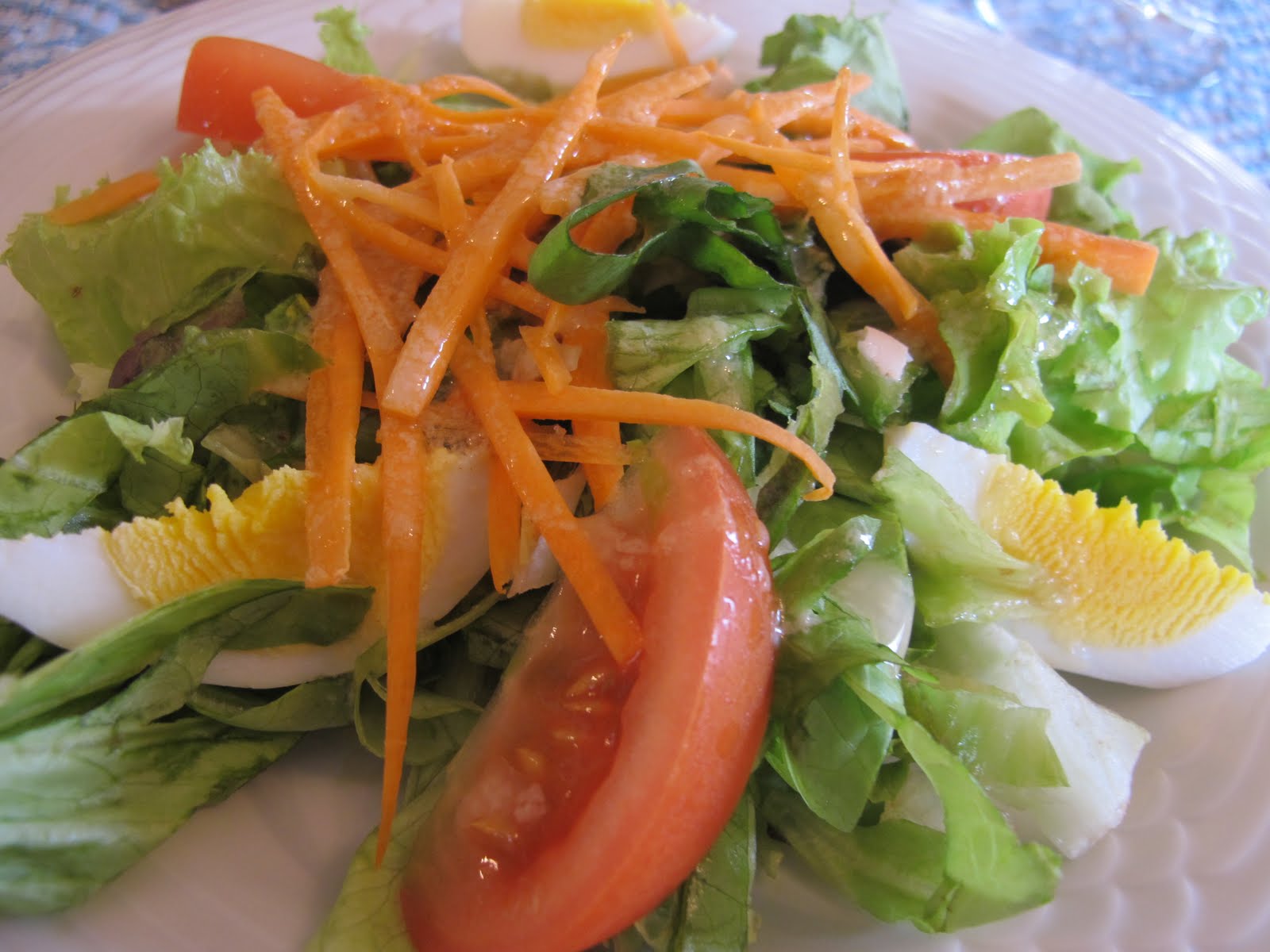
2. Perfect Salads One thing France definitely has on Italy is its salads. While French food seems to lean heavily towards butter, animal proteins, and duck fat, they offer fresh, crisp salads as a counterpoint. Fresh lettuces, maybe tomatoes or carrots, and the bright, tangy Dijon mustard vinaigrette and nothing more. Simple, refreshing, satisfying, the salads in France are done right.
3. Chablis Terroir: the term gets thrown around quite a lot nowadays and the concept of "terroir" seems mysterious and complex like most fancy French words. But when it comes to wine, terroir means one thing: soil-driven. In Chablis, we tasted at two different wineries with slightly different approaches, but each house had the same goal. They want their wines to showcase the unique, mineral-rich soils of the region. The first winery produces single vineyard/appelation, unoaked Chablis. Crisp, clean, mouthwatering, although they use the same varietal (all Chablis is Chardonnay), these wines are a far cry from the California Chardonnay I'm used to. The second winery (actually a large co-op of growers with a centralized wine-making operation) uses some oak in their Chablis, only because they feel the oak helps bring out the minerality by softening the green, fruity flavors. Again, these wines were, crisp, clean, and delicious. The man leading the tasting couldn't emphasize enough the importance of minerality. Chablis should taste like the minerals in the soil. After tasting more than ten Chablis, I think we got his point.
Sunday, September 19, 2010
Working Back Through my Travels: London
On the way back to California for my sister's wedding, I stopped in London. I spent a weekend with my best friend since Kindergarten. He has been living there for over two years now. I had been to London before, but Aaron showed me a completely different side of the city. Here are some of the highlights of the weekend:
1. Saturday morning, Borough Market Jamie Oliver popularized this market, which used to have a grittier, working class feel to it. Now it may be a little touristy or geared towards yuppies, but there's no arguing with the products on offer. Amazing fresh baked goods, cheeses, wines, beers, juices, oysters, sandwiches made from melted Raclette cheese, huge wooden tubs of pestos and olives. Almost anything you could want. Aaron and I grabbed coffee and then walked around. The products were arranged so beautifully and had such vibrant colors that just walking through the place, taking it all in, was a truly satisfying experience. We didn't even need to buy anything.
2. Rock and Roll Dance Party, Saturday Night Aaron described this pub as "The Happiest Bar in London". We had a group of about eight, and we were some of the happiest pub-goers in London that night. They play 60's and 70's rock music, geared towards dancing. Air guitar, leg kicks, faux-vocals, arm swings, more air guitar, anything goes when you're dancing to rock and roll. We didn't dare leave until all our clothes were sweated-through and the DJ stopped playing music.
3. Flea Markets, Sunday Morning We went to two different flea markets, each with a slightly different feel to it, and each with a huge diversity of goods for sale. Cool old sweaters, jackets, coats, scarves, glasses. New merchandise, old merchandise, cameras, records, fridge magnets, bags, ties, suits, almost everything. The second market had a food section, where vendors sold fresh ethnic food. Spanish, Indian, Japanese, Mexican, Chinese, Thai, and it all looked good. More importantly, people were really gathering in all these places. Diverse cross sections of the city came to purchase goods, to eat, to walk around, to see or be seen. It was impressive to see.
4. Coffee at "Look Mum, No Hands" This bicycle-themed coffee shop eptimizes "cool". They have vintage bikes in the interior, good coffee, microbrews, and barristas with awesome mustaches. This is just a fun place to hang out, read the paper, or do work on your laptop. If I lived in London, I would want to be a regular there. I might even develop a crush on one of the employees and after a few months finally arrive at the perfect moment to ask her out for a drink. It's that kind of a place.
5. Pimm's Cup, Saturday Afternoon Aaron arranged a celebration for both of our birthdays (we were both born at the end of August). He gathered a group of friends and co-workers to meet at a pub with a beautiful garden in the back. Starting the drinking at two in the afternoon can be rough, but the Brits have developed a solution: Pimm's Cup. They serve the refreshing ,herbal spirit called "Pimms" with seven-up, fresh strawberries, oranges, cucumbers, and mint. Truly, it's lovely beverage, and sharing a few pitchers of the stuff with friends is a lovely way to spend an afternoon.